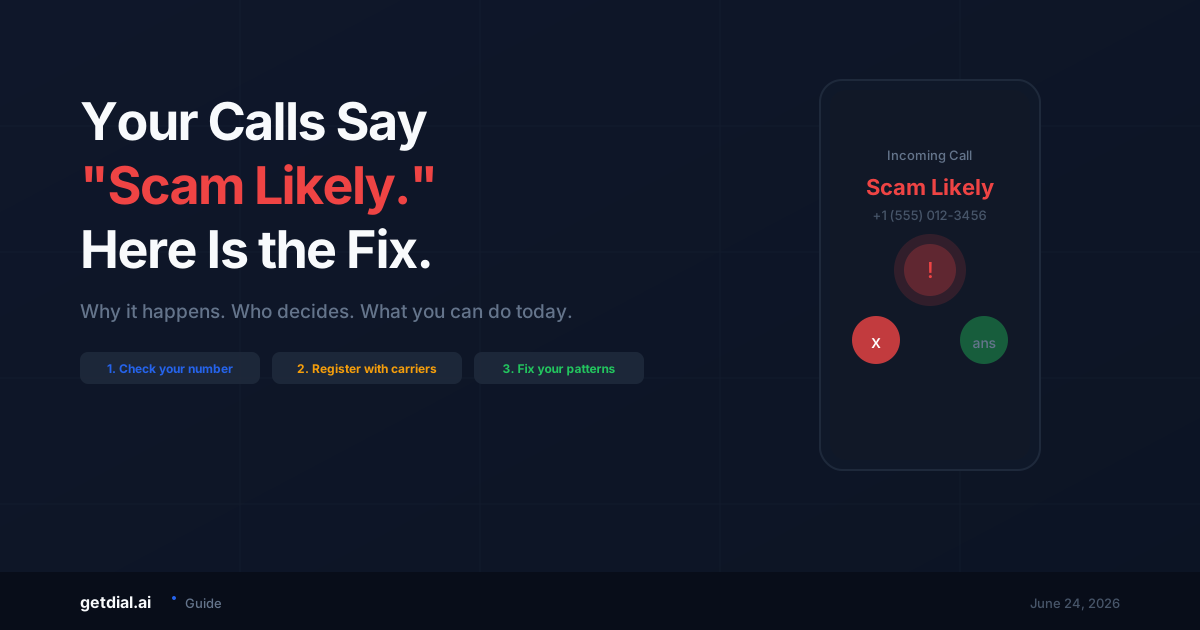
Your AI agent made 300 calls yesterday. Answer rate dropped to 11%. You checked the conversation logs and everything looks fine - good script, reasonable pacing, clear opening.
The problem almost certainly is not the script.
Before a call even rings on the recipient's phone, the carrier has already decided what label to show. If that label says "Scam Likely," most people will not pick up. You will never know the call was labeled. Your logs will just show "No Answer."
Who Actually Decides the Label
Three analytics companies - Hiya, First Orion, and TNS - run software that scores every phone number based on its call behavior. AT&T, T-Mobile, and Verizon license these scores and use them to label incoming calls on their subscribers' phones.
Nobody at a phone company manually reviewed your calls. The algorithm noticed a pattern it associates with spam operations, and the label appeared automatically.
The patterns that trigger flags:
None of these are unique to bad actors. They describe any new AI calling workflow.
What Dial Can Set Up for You
The infrastructure layer - CNAM registration (your business name on caller ID), STIR/SHAKEN attestation, number warming, analytics provider registrations, number pooling - none of this requires you to touch a carrier portal or know what any of it means.
But the right configuration depends entirely on your use case.
A customer support line calling warm leads needs a different setup than an AI agent doing cold outreach at volume. An appointment reminder workflow has a different risk profile than a sales qualification sequence. Number pooling thresholds, warming schedules, rotation triggers - these are tuned to how you actually call, not applied as a generic default.
This is why the right starting point is a conversation, not a settings page.
Reach out to us at [email protected] and describe your use case: who you are calling, how many calls per day, what the agent does, what outcomes you are trying to drive. We will figure out the right setup and handle the implementation on your behalf.
What You Can Control Right Now
While Dial handles the infrastructure side, the analytics algorithms are watching your agent's actual behavior - and that part only you can shape.
Call volume per number. The strongest single flag trigger is a volume spike: a number that goes from zero to hundreds of calls overnight. If your agent calls at high volume, mention this when you contact us - number pooling distributes load so no single number looks unusual.
Calling hours. Keep your agent calling 9am-6pm in the recipient's timezone. Evening and weekend calls score worse and have lower answer rates regardless of spam labels.
Voicemail quality. If your agent leaves voicemails, make them specific and short - under 20 seconds. A vague generic voicemail sounds like a robocall. A specific one that generates a callback is the strongest positive reputation signal a number can get.
Audio variation. Calls with identical scripted audio across thousands of attempts are fingerprintable. Varying the opening sentence even slightly makes the pattern harder to classify as automated.
If a Number Is Already Flagged
If you are seeing a sudden drop in answer rate, email [email protected] with the number and a description of how it has been used. We will check its reputation status, determine what happened, and set up the right replacement configuration for your workflow.
Do not try to fix a flagged number by calling more on it. That accelerates the damage. Retirement and replacement is the right move - and getting the new setup right requires understanding what caused the flag in the first place.
The Short Version
The "Scam Likely" problem is real and it affects legitimate businesses constantly. The algorithms cannot tell your AI agent apart from a robocall farm without help.
The fix is not a DIY checklist - it is a tailored setup based on your specific calling patterns. Email us at [email protected], tell us what you are building, and we will take it from there.